
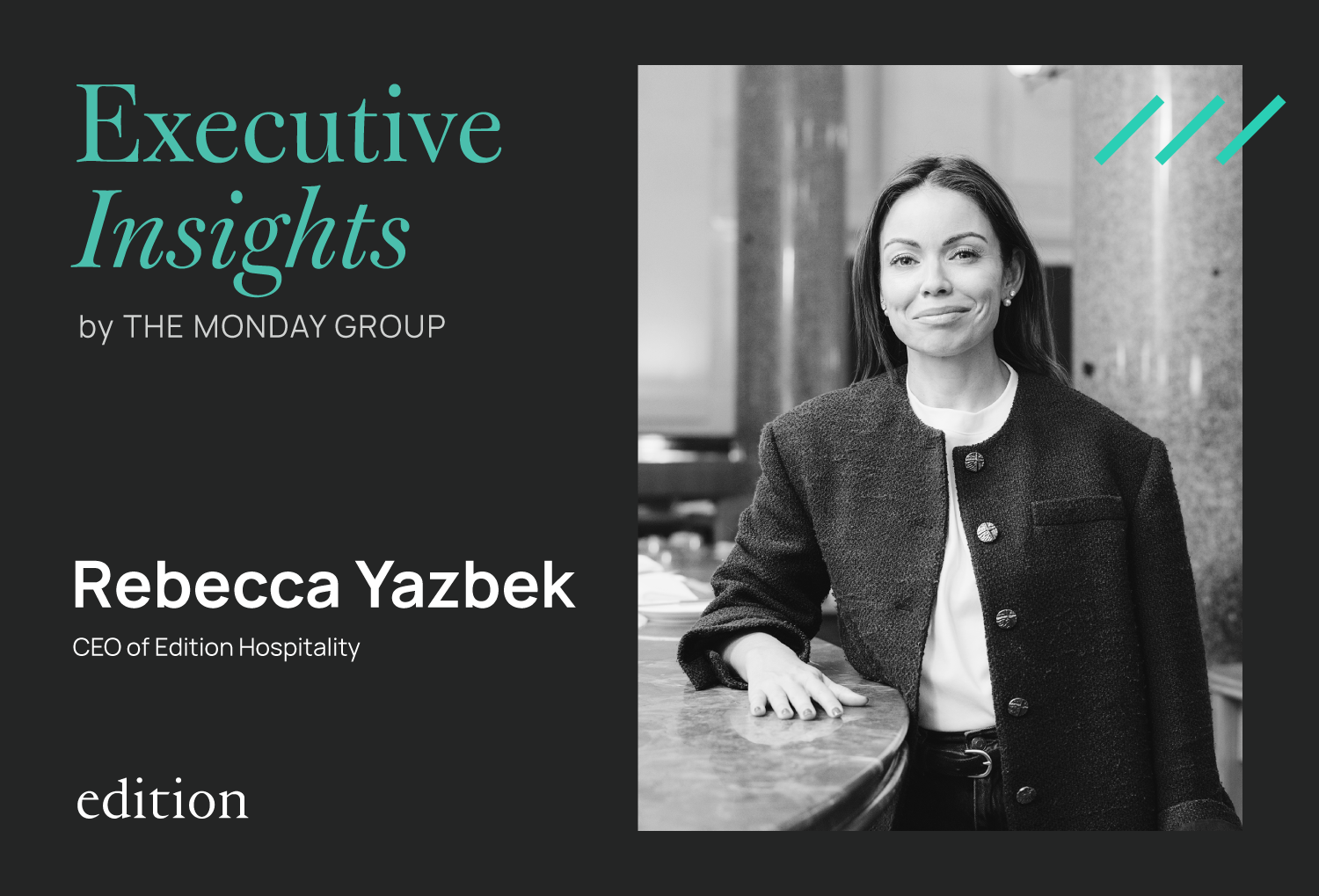
Creating Places with Purpose: Rebecca Yazbek on Growth, People and Hospitality’s Next Chapter
Written by:
Jonathan Lamm
Posted on:
August 19, 2026
Welcome to the latest edition of THE MONDAY GROUP Executive Insights Series, shining a spotlight on the incredible Australian talent across the hospitality, hotel, events and experiential marketing sectors.
Few hospitality leaders have had as profound an impact on Australia’s dining landscape as Rebecca Yazbek. As Founder and CEO of Edition Hospitality, Rebecca has helped shape some of the country’s most respected venues — including Nomad, Reine & La Rue and Florentino — while steering the business through a period of significant growth and transformation.
In this edition of the Executive Insights Series, Jonathan Lamm, Managing Director of THE MONDAY GROUP, speaks with Rebecca about growth, leadership, culture, and why creating places people genuinely want to return to remains at the heart of everything she does.
What initially drew you to hospitality?
It started with design. I’ve always been fascinated by how people use space — restaurants occupy what people often call the ‘third place’ between home and work.
Australia isn’t the biggest market in the world, so we do rely on repeat customers. There’s a level of pride that comes with being loved, being someone’s favourite. When you can create a space that people want to return to, and also want to work in and be part of — that’s the dream for any restaurateur.
When you opened Nomad, did you envision building a multi-venue hospitality group?
Oh no, it wasn’t the plan… my focus was simply taking Nomad as far as it could go. I didn’t have multiple concepts in my brain at all.
The old furniture showroom we found on Foster Street was completely white when we walked in. But I knew, because of my background, that the columns behind the plasterboard were solid timber from the 1870s. I knew there was something beautiful under there. So we stripped it all back — the budget wasn’t enormous, it was my first restaurant, so you had to be clever.
Reine & La Rue happened the same way. My husband called and told me I needed to see this derelict old Stock Exchange building. I turned up with our baby strapped to my chest, and the tradesmen on site didn’t quite know what to make of me. But I walked in and I just thought — this is it. You fall in love with the potential before you fully understand the complexity of bringing it to life.
Florentino is one of Australia’s most iconic hospitality brands. What attracted you to becoming part of its next chapter?
Honestly, it’s still a bit surreal — Florentino has become part of Melbourne’s story, and very few restaurants reach that point. What attracted me wasn’t the opportunity to reinvent it. It was the opportunity to give it a new lease on life as it heads into its 100th birthday. The challenge is respecting what people already love about it while making sure it’s relevant for a new generation of diners.
If a brand has become part of the cultural fabric of a city, I think there’s a responsibility to preserve that and help write the next chapter. The dream is that these restaurants outlive all of us.
We’re also working on an exciting new listening bar concept in the laneway behind Florentino — a seven-day venue open until 3am, with its own personality and a drinks program we’re genuinely excited about. More on that one soon.
There’s been a recent announcement about a Nomad Brisbane opening — can you tell us more about that?
We’re really excited about it. We’ve wanted to bring Nomad to Brisbane for a long time, but finding the right space was always the challenge — I’ve never wanted to open restaurants for restaurants’ sake.
What I loved about the old Gerard’s site was that it already had a great story. It’s a place that means something to Brisbane, and it felt like a very natural fit. That’s always been at the heart of Nomad — creating places people keep coming back to.
It took an extensive search to find Michael Greenlaw as Culinary Director across the group. What were you looking for in that process?
First and foremost, alignment on creativity — there aren’t many chefs whose food I’d put my house on the line for, and Michael blew me away on that front. But at this level, it’s about so much more than the food. It’s temperament, it’s how someone manages people, it’s a strong sense of self.
He changed 146 or 147 dishes at Florentino straight off the bat, which is an enormous undertaking on top of restructuring the whole culinary team. He should be very proud of what he’s achieved in a year.
What have you learned about people, culture and talent as the business has grown?
People want to know who they’re working for and what you stand for. For a long time, I was happy staying in the background, but I’ve realised culture starts from the top — and that everyone’s career looks different, so the more we listen to what people actually want, the better we are at keeping great people in the business.
Hospitality still gets painted with a very broad brush. Restaurants, bars, hotels and cafés are all incredibly different businesses, and the opportunities within them are incredibly different too. There are amazing careers in this industry — but we need to keep creating environments where people feel respected and supported, because that’s what keeps people here long term.
What does leadership look like for you today?
I’ve had to get better at bringing people along for the journey. For a long time, I held my cards pretty close to my chest, but I’ve realised people get excited when they understand where you’re going and why. There are plenty of things my team can do that I can’t. My role is putting great people together, giving them room to do what they’re good at, and making sure we’re all pulling in the same direction. At this stage of growth, communication and transparency have become far more important than trying to do everything yourself.
What do guests expect from hospitality today?
People still want quality, but they’re much more considered about where they’re spending their time and money. The reality is you’re not just competing with other restaurants anymore — you’re competing with the couch, Netflix and Uber Eats. You’ve got to give people a reason to leave the house. If people leave feeling it was worth it, they’ll come back, and they’ll tell their friends.
What challenges do you think the hospitality industry needs to address?
There will be a reckoning, and I don’t say that lightly. The cost base and people’s price expectations are moving in opposite directions — and the gap is only widening. Minimum wages, rent, electricity, produce, all going up, which I absolutely support. But if you want the people serving you to earn a living wage, that has to come from what you’re paying for the food and wine. We’re not a community service.
The public holiday issue is a good example. Restaurants like Nomad often can’t open viably on public holidays even with a surcharge — and then people complain about the surcharge, and then wonder why restaurants aren’t open on the days they’re actually free. It’s circular, and it needs to change. My other concern is making sure there’s still room for independent operators — the industry needs diversity, not just big groups getting bigger.
What’s next for Edition Hospitality?
Honestly, I’d quite like to stop building things for a while and focus on opening them. We’ve got a really clear trajectory for the next chapter — including a large upcoming project in Sydney — and now I want to see how well we can execute.
For the past few years, we’ve been building the infrastructure at the same time as building the restaurants — the head office, the leadership team, the foundations of the business. Now that’s in place, and ideas are coming from all parts of the business, not just a few of us sitting around a table. It feels like a much more mature business than it did a few years ago.
I want to see just how good we can become, and I want Sydney, Melbourne and Brisbane to be genuinely world-class cities for dining. If Edition can be part of making that case, that’s enough for me.
ABOUT REBECCA
Rebecca Yazbek is the Founder and CEO of Edition Hospitality, one of Australia’s most respected independent restaurant groups, with more than a decade of experience shaping hospitality destinations across Sydney and Melbourne.
With a background in interior architecture, Rebecca has always approached hospitality through the lens of design, human connection, and a deep respect for place. In 2013, she identified a gap in the market for a cellar-door dining experience in the city and founded Nomad Sydney alongside her husband, Al Yazbek. Since then, she has expanded the group with Nomad Melbourne, Reine & La Rue, and the acquisition and evolution of the iconic Florentino — with Nomad Brisbane and further projects in the pipeline.
THE MONDAY GROUP is proud to have supported Edition Hospitality with the executive search and placement of Michael Greenlaw as Culinary Director. Looking to build a high-performing leadership team for your hospitality business? Let’s talk.
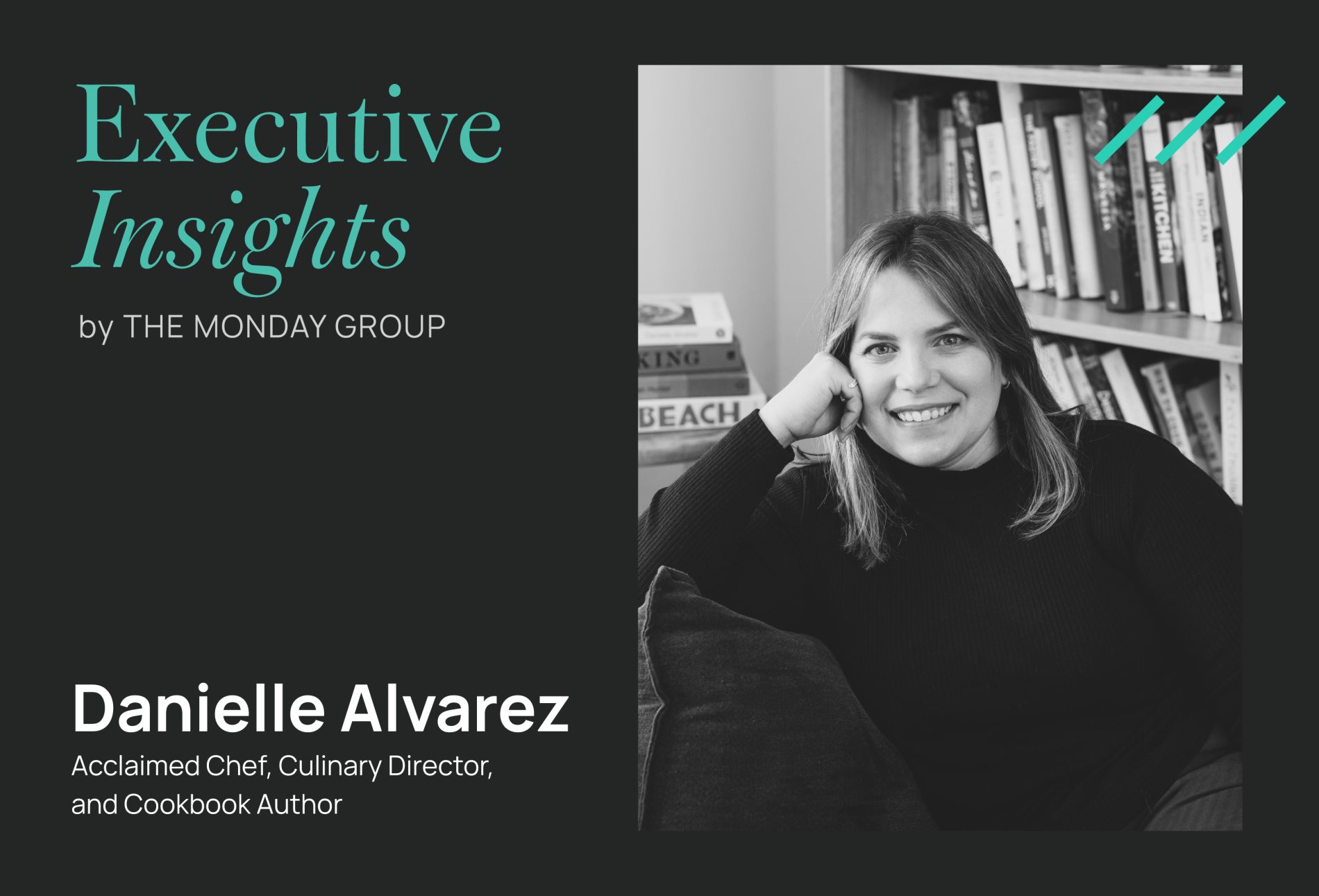
May 2026
Curiosity, creativity, and the changing face of hospitality: Danielle Alvarez
Welcome to the latest edition of THE MONDAY GROUP Executive Insights Series, shining a spotlight on the incredible Australian talent...
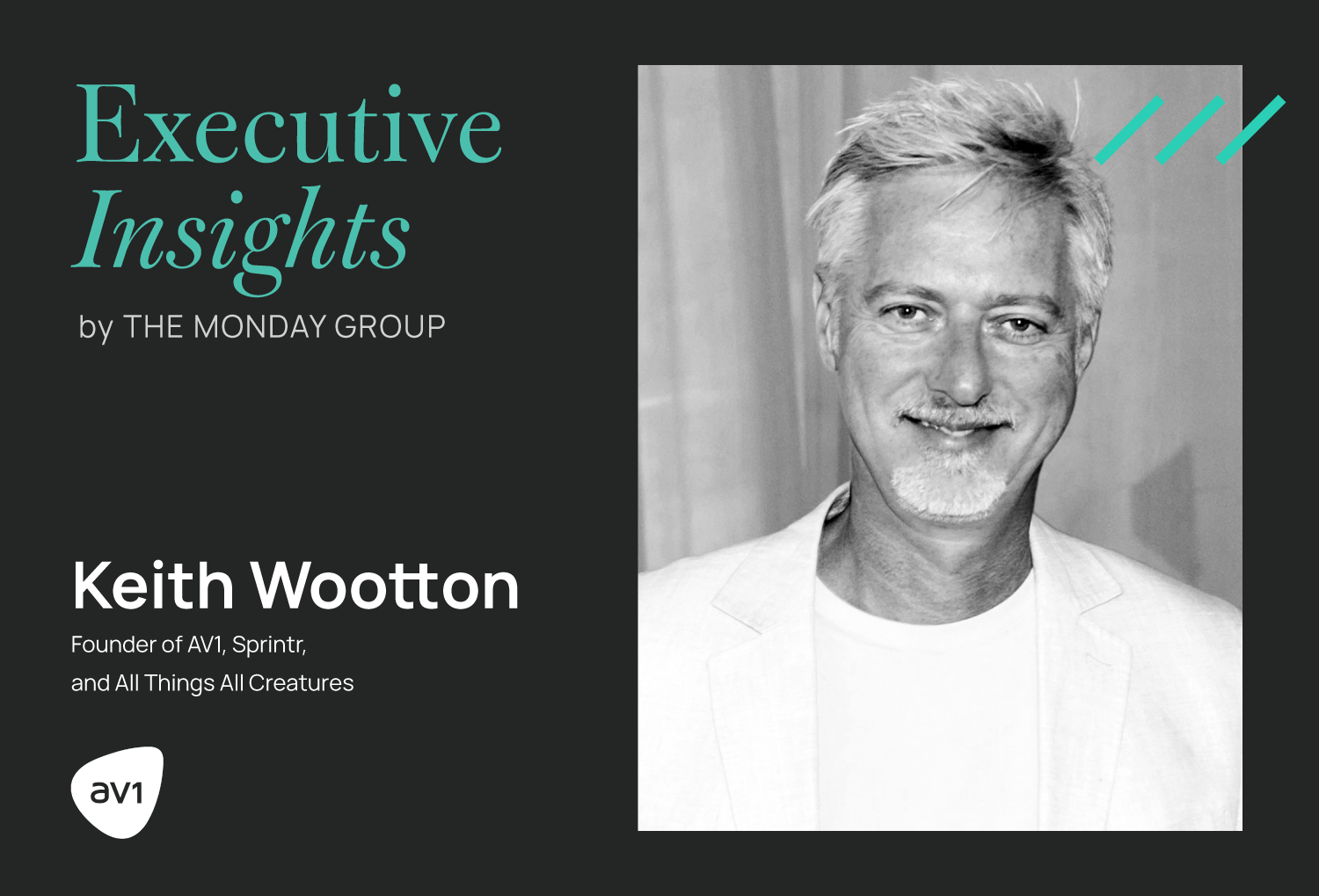
Mar 2026
From Rock and Roll Dreams to Industry Leadership: Keith Wootton
Welcome to the latest edition of THE MONDAY GROUP Executive Insights Series, shining a spotlight on the incredible Australian talent...
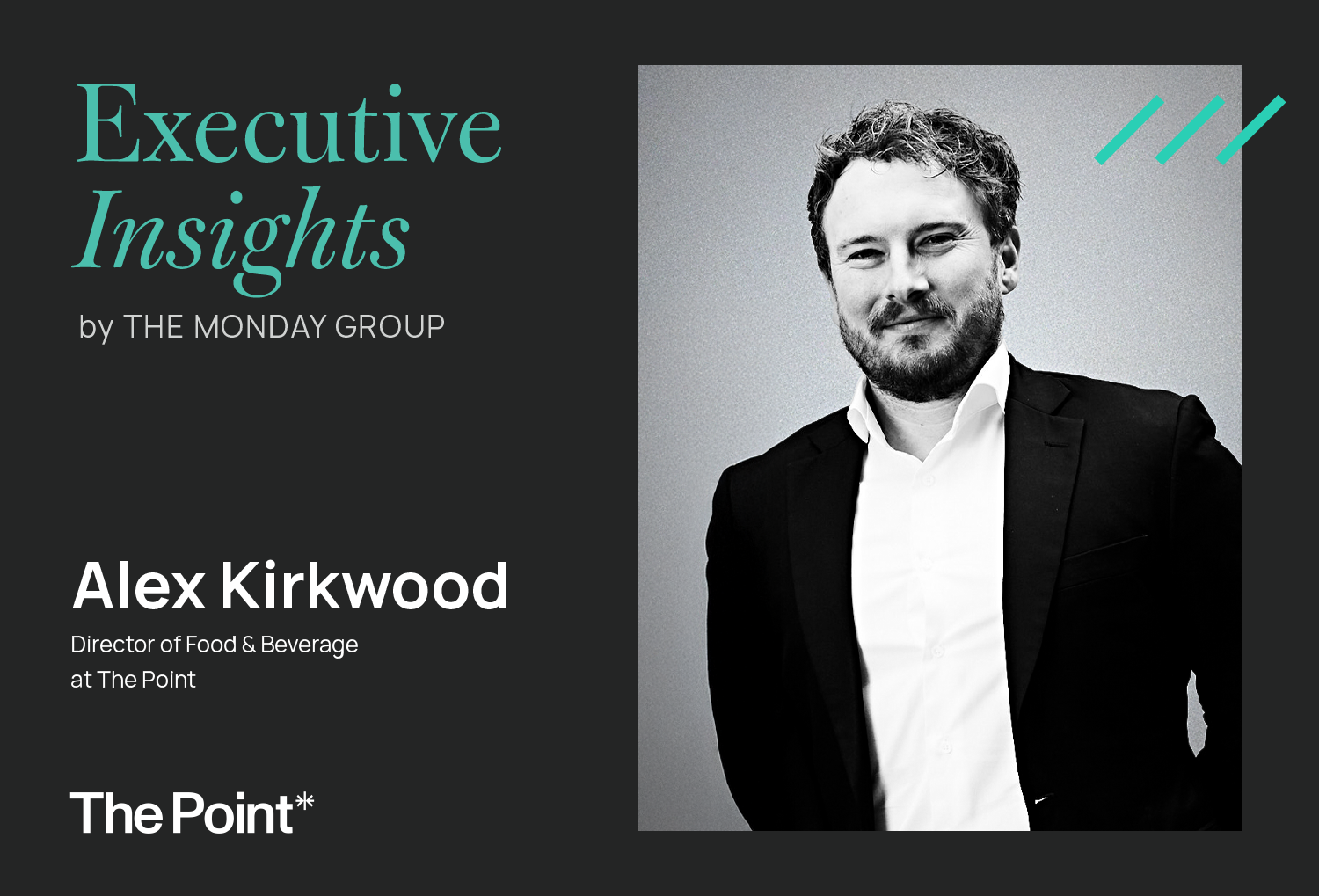
Dec 2025
Balancing product, profit and people in hospitality: Alex Kirkwood
Welcome to our third edition of THE MONDAY GROUP Executive Insights Series, shining a spotlight on the incredible Australian talent...