
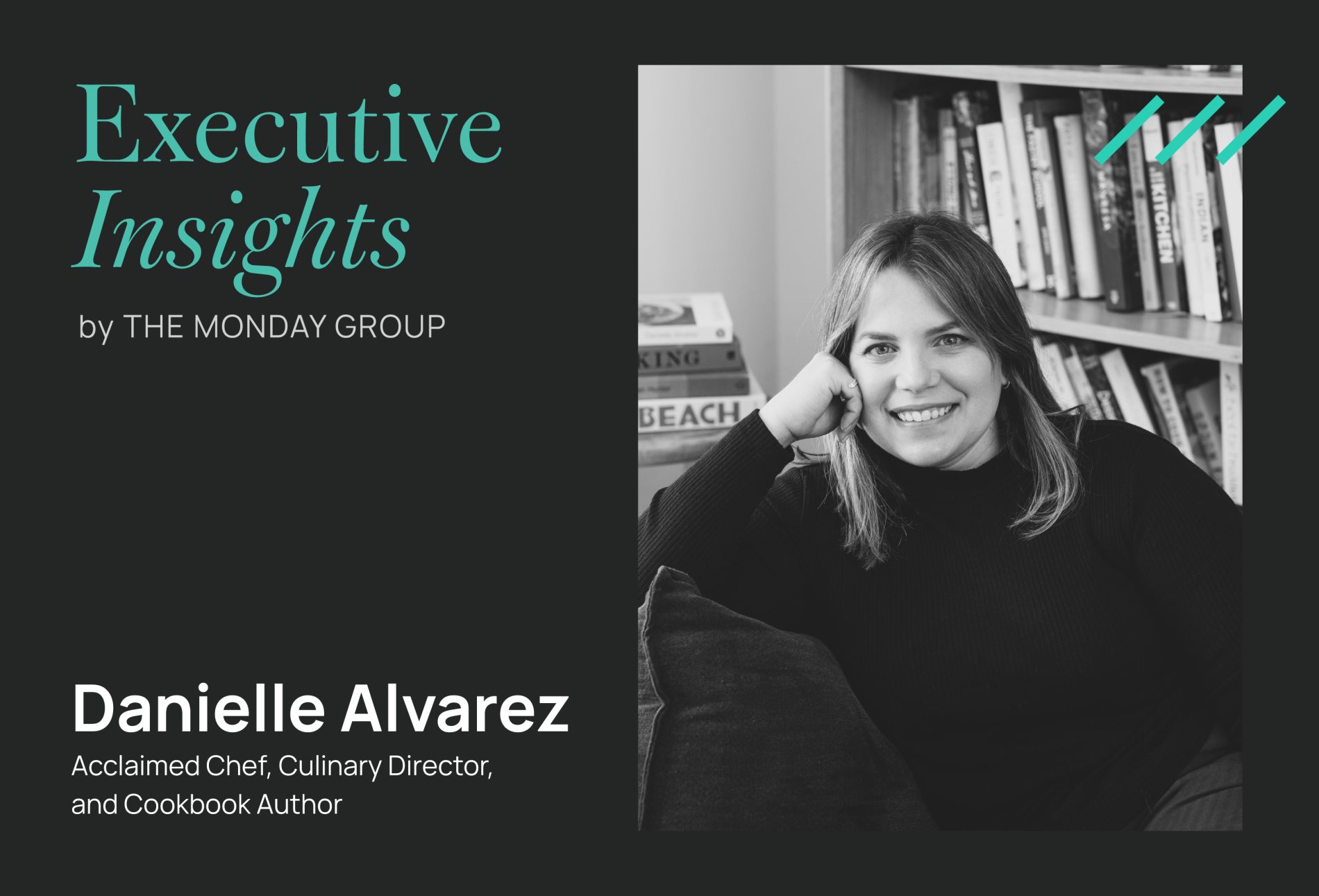
Curiosity, creativity, and the changing face of hospitality: Danielle Alvarez
Written by:
Jonathan Lamm
Posted on:
May 5, 2026
Welcome to the latest edition of THE MONDAY GROUP Executive Insights Series, shining a spotlight on the incredible Australian talent across the Hospitality, Hotel, Events and Experiential Marketing sectors.
Few chefs have had a career as internationally storied and deeply personal as Danielle Alvarez. From her formative years at the legendary The French Laundry, to her role as the opening head chef of the much-loved two-hat restaurant, Fred’s, in Sydney, Danielle has built a career defined by a singular philosophy: cooking with seasonal, produce-driven integrity.
Today, Danielle’s career has evolved into a dynamic freelance role. As Culinary Director for Event Venues at the Sydney Opera House, in partnership with Trippas White Group, she writes menus for one of the city’s most iconic venues. Alongside this, she writes a monthly column for Good Weekend, is working on her third cookbook, and volunteers teaching cooking classes at a young girls’ detention facility.
In this conversation with Jonathan Lamm, Managing Director of THE MONDAY GROUP, she reflects on the lessons learned from culinary icons, the changing face of Australian hospitality, and why curiosity is the most critical trait for any young chef.
What are you currently doing with Trippas White Group?
I am the culinary director for the events venues at the Sydney Opera House. They currently have the tender for those spaces. As part of that, I write all the menus. So if you wanted to have an event, say at the Yallamundi Room, there are set menus there that I’ve written, that I’ve designed, that I’ve trained the team on for them to execute.
We also do six or so ticketed events throughout the year where people can come in. You don’t need to have an event. You can buy a ticket to a dinner or a talk that we might be hosting. We do different things just to activate the space, and I participate in those.
What does the rest of your schedule look like?
That is kind of the beauty of being freelance, I get a lot of things coming my way. That work has really expanded in the past few years. Sometimes it’s creating content, sometimes it’s collaborating on an event for a brand.
There are things that I want to produce as well, because I miss cooking for people, as well as writing cookbooks. I write a monthly column for the Good Weekend magazine.
I’m also about to start some volunteering work with a young girls’ detention facility, teaching cooking classes to them. Between all of that, days are super full, probably overfilled, to be honest.
You trained in some globally renowned kitchens. What are some of the biggest lessons you took from those early environments?
If I go back to my time at The French Laundry, that’s where the connection to fresh produce really started. I grew up in Miami in the eighties and nineties, where availability of organic seasonal produce was very slim. When I moved to California to take an internship in the kitchen, that was the first time I saw different varieties of melon. I thought there was rockmelon and that was it.
To taste that difference blew my mind. It was a whole other world, and I wanted to play with those ingredients. At The French Laundry at the time – I’m pretty sure they still do – they had a garden across the road from the restaurant. So I got to see and taste a lot.
I stayed in California for about ten years. My last stop was Chez Panisse. I cooked there for four years, and it was probably the best four cooking years of my life. We would come in as chefs and cook something different every single day. There were no recipes…you were cooking from taste and intuition. It was a really beautiful, nurturing, calm environment, which was kind of the opposite of The French Laundry, which was incredibly tense and stressful.
I felt like, okay, there is a way to actually produce something excellent and do it in a way that leans into pleasure and beauty, but without producing feelings of anxiety and stress in the kitchen. That was probably my biggest lesson from Chez Panisse.
How did that philosophy evolve when you moved to Australia?
It’s only evolved in the way that I feel like it’s more important to the quality of your cooking than ever. Australia has some excellent producers, but the challenges around labour, distances, costs of operating a farm make it quite prohibitive to a lot of farmers. There just isn’t a lot of access to land for small scale organic farming.
There are still farmers interested in doing beautiful work and growing beautiful things. But I feel like in order to supply the industry, let’s just talk about Sydney, we need so much more, because there just aren’t enough people farming like that.
Again, it comes back to the cost of it. Supporting farmers like that is really important, but it’s a huge challenge just getting the products into town.
How did the opportunity to open Fred’s come about?
I was finishing up at Chez Panisse and decided to come to Sydney for a holiday. I came down in February of 2014, and summertime in Sydney is pretty magical. I fell in love. I was going out to different restaurants, and was blown away by the hospitality, the quality of the food, the friendliness. Everyone was so interested in hearing about where I came from, and everyone knew Chez Panisse.
I thought it would be a great place to cook, and obviously to live, even if just for a little while. So I sent a message to an Australian friend of mine and asked him if he heard of any good job opportunities in Australia, would he let me know? I sent that email from Sydney airport as I was about to board my plane back to the US.
By the time I landed in Miami, 24 hours later, I had a message from him saying, “It’s so weird that you sent me that, because only this weekend I was contacted by the Merivale group. They want to open a farm to table concept in Paddington. Would you be interested in speaking to them?”
He connected me with their Director of Food & Beverage, and we had a great conversation about food. A few more conversations down the road, we decided the only way to figure out if this was going to work was if I came back to Sydney, met them in person, and cook for the team to see if we were aligned.
I came back a couple months later. I cooked a meal for Justin (Hemmes) and the team. They loved it. We drove from that tasting to the site in Paddington, sketched out the restaurant on a piece of paper, and it was decided. I moved back a couple months later to take on that role.
How would you describe the current state of hospitality in Australia?
There is incredible talent here. I think there are a lot of young people trying to do their own things, independent operators doing the really exciting things at the moment. But I think the bigger groups have been able to multiply at a much more rapid pace than the smaller operators, because the risks have gotten so high and the costs have gotten so high.
What we might be losing is that thing a small independent operator can offer: that personal connection, where you walk into a restaurant and they make you feel like they know you. A menu that’s changing all the time, using the freshest ingredients. I feel like it’s gotten quite hard and quite expensive. Restaurants have never been an easy game, but I think the margins have gotten so small that it’s kind of killing creativity a little bit.
There are still incredible people doing incredible things, and we just need to support them. We need to go out to the restaurants we love, the ones we want to see here in another five or ten years.
What do diners expect from restaurants today that they didn’t five or ten years ago?
The one thing that sticks out is the fit outs of restaurants. They’ve become incredible, you walk into some places and you feel completely immersed and transported. It’s amazing.
I think people have come to expect to be wowed as soon as they walk into a space. The expectation these days has shifted to wanting the wow factor from the moment you walk in. They want it to look great, sound great, food to taste great, service to be friendly, fast, efficient. And they want to be able to dine out often.
What trends do you think will shape the future of restaurants and dining over the next five years?
Affordability is huge, and I think it’s only going to become a bigger point. We’re dining less and less at very fancy, very expensive establishments. There are some three hat type places where you go for a real experience, you go to celebrate a milestone. But as a consumer, we’re consuming that kind of food less. The ambition to open the next three hat restaurant, even from restaurateurs and chefs, just isn’t there like it used to be.
We’re leaning more towards things that are more accessible and communal. I love seeing chefs who are from a particular place and passionate about the food from their country, bringing that to Australia. To democratise it but still make it really good is a great trend. I just hope the costs don’t become so astronomical that it kills the ambition of younger people to want to be in food and restaurants.
What role do you think the big groups can play in sustainability and training?
True sustainability means you can sustain your restaurant and all your expenses before you can start thinking about being sustainable towards the environment. When other existential costs get in the way, it’s the first thing to get sidelined. Restaurateurs need to get a handle on their business model first.
This is where the big groups actually have a great advantage. They have a lot of programs built in to train their teams around cost management. Because they are so well trained and operate so well in that space, they can give a little bit more towards projects like sustainability inside the venues.
What does a healthy kitchen culture look like today?
Chefs don’t want to work in places that are toxic and abusive. There’s a big cultural change happening. A lot of people my age experienced that when we were younger and didn’t want to tolerate it in the kitchens we ran. The younger generation just doesn’t want to put up with it.
When we were younger, it was kind of like, “Just put up with it. If you work there for a few years and you can deal with that, you’ll be able to work wherever you want.” But these days, you can pretty much get a job at any restaurant you want because there’s always work available. So there isn’t that scarcity mentality around work. There is too much work to go around. That’s changed how employers need to treat people and what they need to give to this next generation.
We’re not doctors saving lives. We shouldn’t be putting that same level of pressure on people. We need to make it a positive environment where people can thrive and grow, where they can see a pathway for themselves, where they can earn enough money to live in the city they’re in. Employers have responded, and they are doing more of that.
What do you look for when you’re hiring young chefs?
Curiosity is a big one. I just don’t see enough of it sometimes. If someone is curious and asking the right questions, you can tell they’re observing what you do and how you work.
In food, especially when you’re doing simple food, the devil’s in the details. A young chef who is curious, inquisitive, and genuinely loves food and cooking and restaurants. I always like to ask chefs in interviews what their favourite cookbooks are, what their favourite restaurants are and why. If someone doesn’t have those or can’t explain what they love about it, it’s not a great thing for me. There has to be some degree of love in it.
It’s not the kind of job you get into just to cross off a to-do list. It all requires a bit of thinking, attention to detail, and love for what you do.
What role does management training play in developing leaders?
The funny thing about chefs is it’s quite hard to be a great chef and a great manager all in one, especially right from the start. Yet we do expect that from chefs, and I think that’s a bit unfair.
To train as a chef is very different to train as a manager. And of course, it’s a people business. If we haven’t invested in training people, how do you get your team to help you hit your targets? That’s a very different skillset than writing a menu. It requires a lot of self-understanding, a lot of understanding of human nature and the dynamics of how people work together.
I got a lot of that training at Merivale – I did a couple of different management training courses, and it totally altered how I see a team, how I saw myself as part of the team, how I saw myself as a leader.
Tell us about your cookbook.
Aside from the work that I do that is public, I do a lot of cooking at home. I’ve just written my third cookbook, we’re in the editing phase now, and it’ll be out in November. I’m leaning into things that are easy and accessible to myself.
I love fresh organic produce from a small local farm probably more than anyone, but if I can’t get it, I have to use what’s around me. If I’m just trying to get dinner on the table, I’m leaning into things that are easy and don’t require a trip to a specialty food grocer.
I really lean into beautiful soups, lentils, beans. I’m learning how many different things you can do with mince. Really simple, easy stuff that is delicious and comforting and easy to put together at the end of a busy day, which is what all of us want. That’s actually what my next book is about, so I hope people will enjoy that when it comes out.
If you were opening a restaurant from scratch today, what would you do differently?
I think about that often. I dream about doing really small, curated projects, a menu that changes every day, similar to what I was doing at Fred’s. That’s what my heart wants to do, but my head stops me and says, “Hang on, that burnt you out before.” A lot of that relies entirely on one person’s creativity and drive.
If I was seriously going to do something, it would have to be something I could teach, where the team drives a lot more of it rather than it being one sided.
The business minded brain I have now that I didn’t have when I started Fred’s would tell me it probably should be a restaurant that does lunch and dinner with at least a hundred seats, because that’s kind of the magic number for profitability. Otherwise you’re just flipping tables all the time, which puts pressure on the team and the guests.
So it’s either a hundred seat restaurant or a tiny bakery that does one thing. That’s kind of my dream.
Who are your food heroes?
A lot of women, unsurprisingly. Alice Waters, who I worked for – she’s incredible. She changed everything in the US around dining. Skye Gyngell, who passed away last year – she had Spring restaurant in London, but she’s Australian, and I always admired her.
Maggie Beer, Stephanie Alexander – all women who paved the way for me to be able to do what I do now. Incredibly influential. Kylie Kwong. And I go back to great food writers like Elizabeth David, Madhur Jaffrey, Marcella Hazan – women who brought food to life through words and made me fall in love with cooking in the first place.
ABOUT DANIELLE
Danielle Alvarez is one of Australia’s most celebrated female chefs, known for her produce-led, farm-to-table approach shaped by leading kitchens across the US and Australia.
Raised in a Cuban-American family, her love of cooking began at home before being refined in California at institutions including The French Laundry and Chez Panisse, which she credits as pivotal to her development.
In Australia, she led the vision behind Fred’s in Paddington, earning and retaining two chef’s hats while establishing it as one of the country’s most admired restaurants. She is the author of Always Add Lemon (2020) and Recipes for a Lifetime of Beautiful Cooking (2023), a columnist for Good Weekend Magazine, and co-host of The Good Food Kitchen alongside Adam Liaw.
In 2023, in partnership with Trippas White Group, Alvarez was appointed Culinary Director – Event Venues at the Sydney Opera House, where she now oversees menus across its premium event spaces.
Her third cookbook is set for release in November.
Visit her website at: https://daniellemalvarez.com/
* * *
Need to hire exceptional culinary talent or land your next role in Australia’s most exciting kitchens? Let’s talk.

Aug 2026
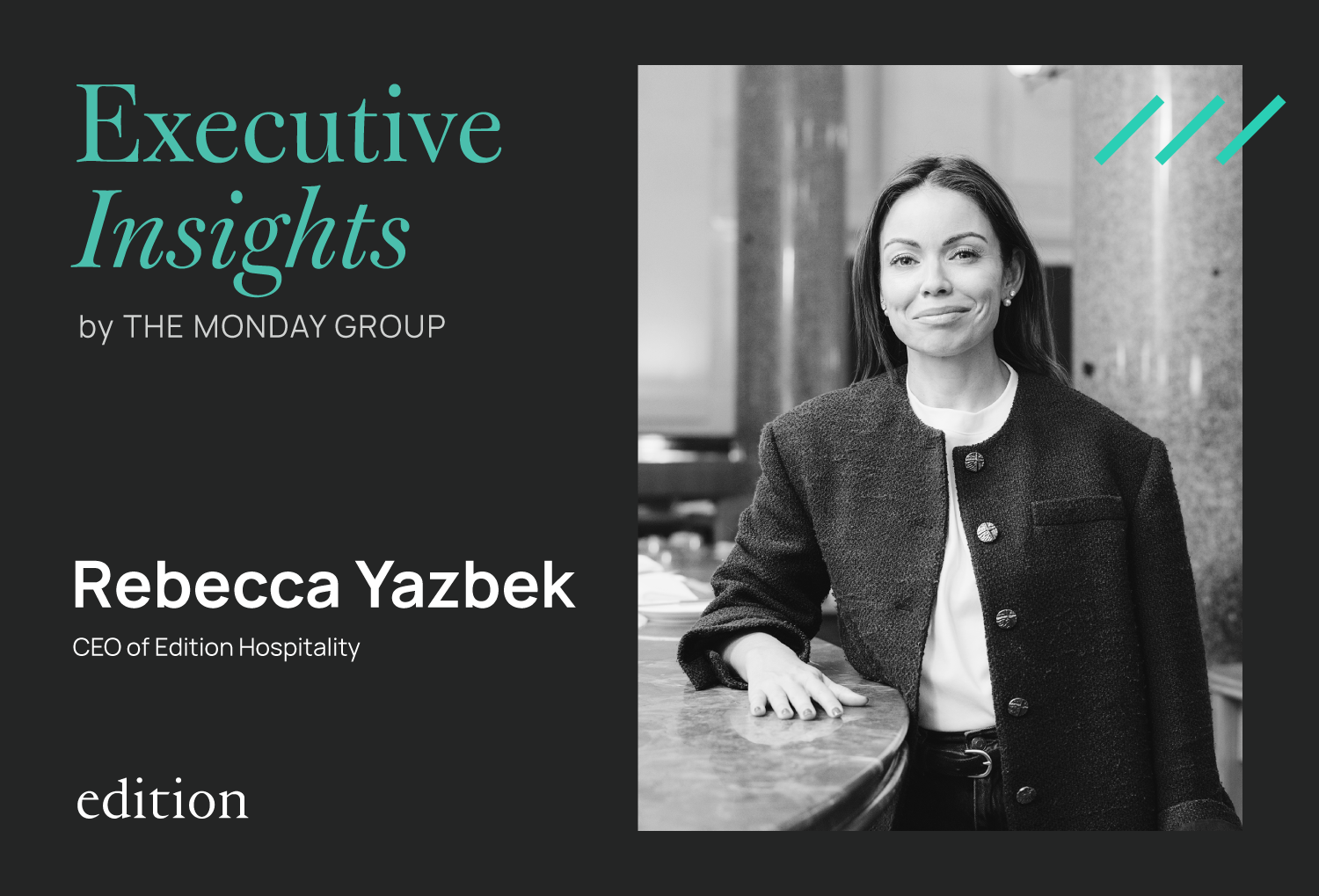
Creating Places with Purpose: Rebecca Yazbek on Growth, People and Hospitality’s Next Chapter
Welcome to the latest edition of THE MONDAY GROUP Executive Insights Series, shining...
Mar 2026
From Rock and Roll Dreams to Industry Leadership: Keith Wootton
Welcome to the latest edition of THE MONDAY GROUP Executive Insights Series, shining a spotlight on the incredible Australian talent...
Dec 2025
Balancing product, profit and people in hospitality: Alex Kirkwood
Welcome to our third edition of THE MONDAY GROUP Executive Insights Series, shining a spotlight on the incredible Australian talent...